(415) 889-8834

Roof Anatomy

Every part of a roof, in the order water meets it.

A roof is not a surface, it is an assembly. When something leaks, the question is almost never 'what is wrong with the shingles' — it is which part of this list gave up, and what it took with it.

Every part of a roof, in the order water meets it.

2 components

Structure

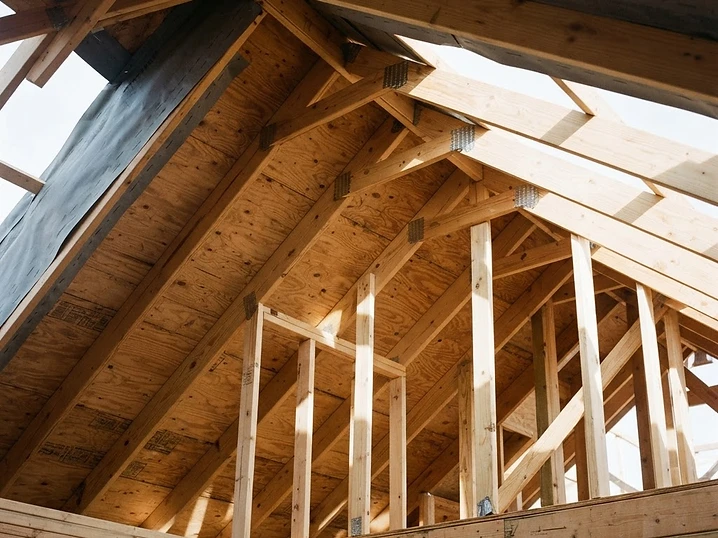
Roof deck

The plywood or OSB substrate everything fastens to. Deck condition decides what kind of roof you can install at all.

How it fails

Soft spots, delamination, and old fastener holes that no longer hold. A new roof over a tired deck is a short-lived roof.

Underlayment

The secondary water-shedding layer over the field of the roof. If shingles or tiles are breached, this is what still keeps the house dry.

How it fails

Tears from foot traffic, wrinkles that create channels, and age. On tile roofs the underlayment fails long before the tile does.

5 components

Waterproofing

Leak barrier

Self-adhering membrane at eaves, valleys, and penetrations — the places most exposed to wind-driven rain and standing water.

How it fails

Missing or short runs at eaves, and adhesion lost to dust or a dirty deck.

Valley flashing

Directs the concentrated flow where two roof planes meet. A valley carries more water than any other part of the roof.

How it fails

Open valleys clogged with debris, and closed-cut valleys cut short of the centerline.

Step flashing

Individual metal pieces woven into each course where a roof meets a wall, shedding water out and over the shingle below.

How it fails

Nailed through the face, installed in one long bent piece, or missing a kick-out at the bottom.

Counterflashing

The upper half of a wall or chimney flashing, cut into the masonry or siding so water cannot get behind the lower flashing.

How it fails

Reglet loose or unsealed, and flashing relying on caulk instead of a mechanical turned-in edge.

Pipe boots and penetration seals

Pre-formed boots and collars that seal vents, plumbing stacks, and conduit where they pass through the roof.

How it fails

Rubber collars that crack after years of UV. This is one of the most common small leaks we find.

2 components

Perimeter

Drip edge

Metal at the eaves and rakes that pushes water clear of the fascia and into the gutter instead of behind it.

How it fails

Absent on older roofs, or installed under the underlayment instead of over it.

Starter course

A factory-sealed first row that locks the field shingles along the eave and rake, and seals the rake edge against wind.

How it fails

Cut field shingles used as starters, which seal poorly and lift in wind.

2 components

Surface

Field covering

The visible weathering surface — shingles, membrane, panels, or tile. It takes the sun, rain, and impact.

How it fails

Granule loss, blistering, cracked tiles, lifted panels, and seam failures.

Hip and ridge caps

Purpose-made caps that cover the peak and the outside corners of a roof, the two places wind works hardest.

How it fails

Cut shingles folded over the ridge instead of a real cap — a wind-lift and leak point.

2 components

Ventilation

Ridge vent

Exhaust venting along the ridge that lets hot, moist attic air escape, so the roof deck dries instead of condensing.

How it fails

Vent installed without matching intake, or a filter clogged with paint and dust.

Intake vents

Eave or soffit vents that let cool air in. Without intake, a ridge vent has almost nothing to exhaust.

How it fails

Blocked by insulation pushed into the soffit bay — very common after an attic insulation upgrade.

1 components

Water management

Gutter and apron flashing

Gutters carry water away from the building, and apron flashing protects the roof-to-gutter and roof-to-wall junction that feeds them.

How it fails

Undersized or clogged gutters that back water up under the bottom courses.

The details, on video

Flashing is where roofs fail

Step flashing, kick-outs, drip edge, and counterflashing. If you watch one set of videos on this site, watch these.

GAF · Mastering the Roof

How to install flashing on a roof

Wall, sidewall, and step flashing detail from the manufacturer whose system the flashings are integrated with.

Field demonstration

Step flashing and kick-out flashing done right

Step flashing and the kick-out at the bottom of a wall — the two details behind a large share of the leaks we diagnose.

This Old House

Drip edge and step flashing

A clear look at eave drip edge and how it ties into step flashing at a sidewall, with the sequencing that makes it watertight.

See how we install each system

Get Started

Something leaking and you are not sure which part?

Send us a photo or book a site visit. We will identify the component, explain why it failed, and scope the repair.

Service Areas

Roofing & Waterproofing in San Francisco & San Mateo County

We provide roofing & waterproofing for residential and commercial properties in every city and community across San Francisco and the Peninsula south to Hillsdale in San Mateo. Select your area for local building conditions, exposure, and details.

Not sure whether we cover your address? View all service areas or contact us to confirm.