Materials
Every roofing material, compared honestly.
There is no best roof — there is a best roof for a particular building, pitch, budget, and streetscape. Here is what each material is good at, and the failure you should expect from it in twenty years.

Slope decides first
Steep-slope materials shed water by gravity and rely on overlapping courses. Low-slope roofs cannot, so they use a continuous membrane instead. Getting this wrong is how flat sections of pitched roofs end up leaking.
Then weight
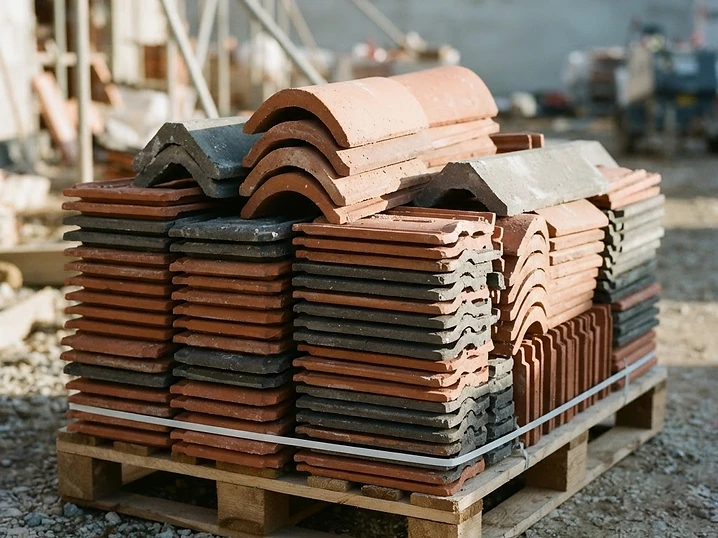
Clay and concrete tile can weigh several times what a shingle roof does. On an older San Francisco home the structure may not carry it — which is why stone-coated steel exists.
Then maintenance
Every material has a maintenance clock. Shingle granules age, membrane seams need inspection, and on a tile roof the underlayment underneath is what actually expires.

Family
Steep-slope
We install
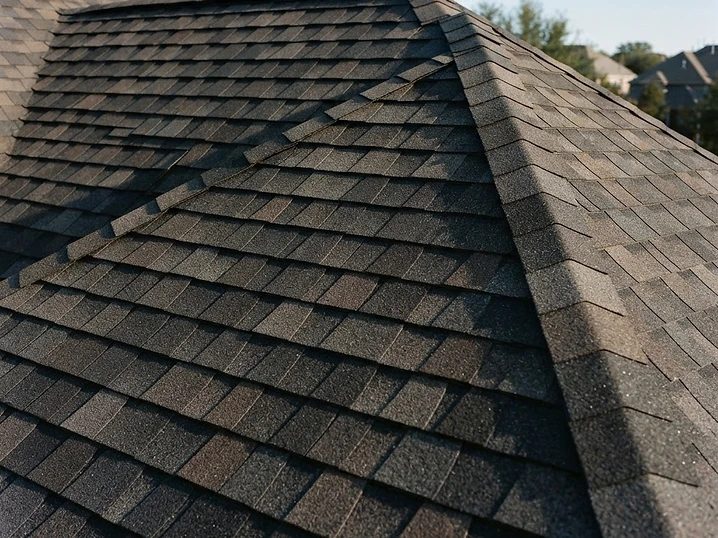
GAF Timberline
Fiberglass asphalt shingle
The most common roof in San Francisco and on the Peninsula. A fiberglass mat is coated in asphalt and ceramic granules, laminated into an architectural profile that sheds water and takes decades of sun and fog.
Where it belongs
- Pitched roofs above a 2:12 slope
- Victorian and Edwardian homes where the roof is not the visual statement
- Projects where budget, availability, and repairability all matter
- Neighborhoods with a shingle streetscape worth matching
What to watch
- Needs a properly ventilated, solid deck — shingles hide nothing
- Granule loss and algae streaking are the first visible signs of age
- Not appropriate for flat or very low-slope sections, which need a membrane

Family
Low-slope
We install
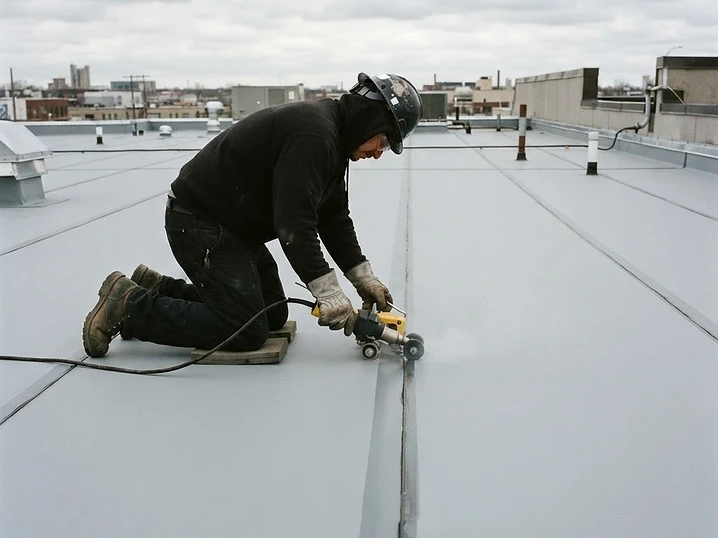
GAF EverGuard
TPO single-ply membrane
A thermoplastic polyolefin sheet, usually white, heat-welded into a continuous membrane. It is the workhorse of flat and low-slope commercial roofs, and increasingly common on flat-roofed residential buildings.
Where it belongs
- Flat and low-slope roofs down to a 1/4:12 pitch
- Commercial buildings and mixed-use buildings with rooftop equipment
- Reflective roofs that reduce heat gain in a mild climate
- Large roofs where welded seams beat adhesive joints
What to watch
- Seam quality depends entirely on welder skill and machine calibration
- Ponding water and poorly detailed drains shorten life dramatically
- Foot traffic and trades after installation can puncture it if unprotected

Family
Low-slope
We install
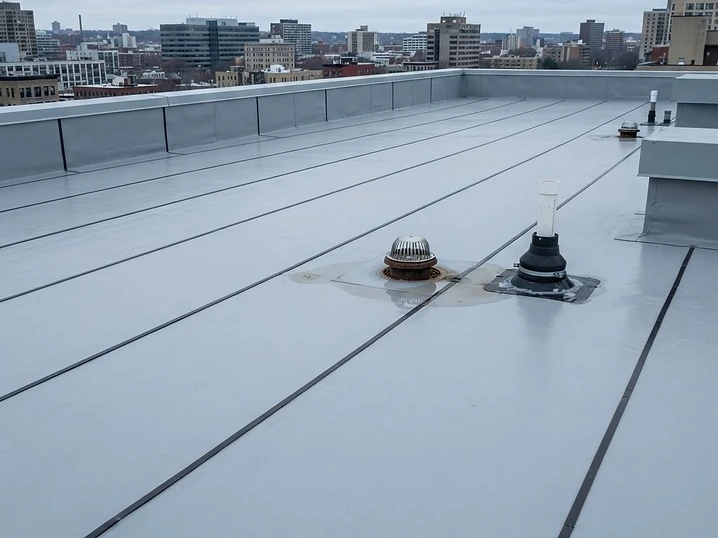
GAF EverGuard PVC
PVC single-ply membrane
A plastic single-ply membrane with excellent resistance to grease, chemicals, and ponding water. Where a roof is next to a kitchen exhaust or sits in standing water, PVC is often the better membrane.
Where it belongs
- Restaurants, kitchens, and buildings with grease-laden exhaust
- Roofs that pond water seasonally
- Coastal buildings exposed to salt air
- Long service life on flat commercial roofs
What to watch
- Plasticizers can migrate — membrane and accessory compatibility matters
- Costs more than TPO up front
- Welding discipline is just as critical as with TPO

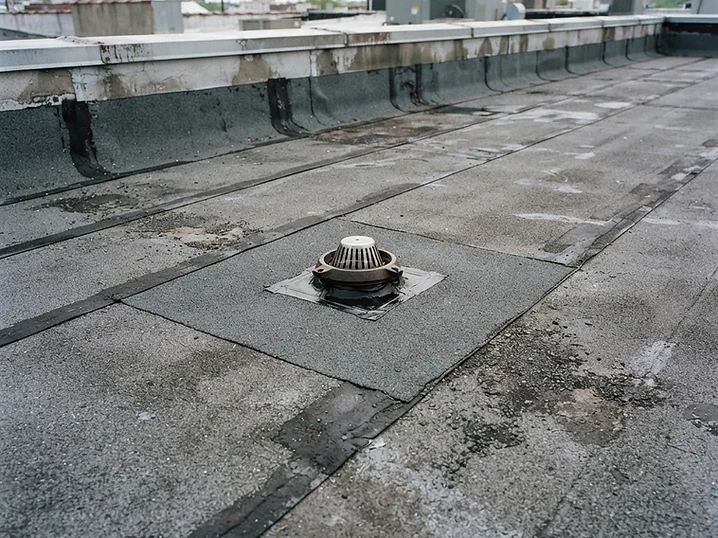
Family
Low-slope
We install
GAF Ruberoid / Liberty
Modified bitumen
Asphalt reinforced with SBS or APP polymers and installed in plies — base sheet, then cap sheet. Redundant by design, repairable, and well suited to small and mid-size flat roofs.
Where it belongs
- Residential flat roofs, porches, and garage tops
- Small roofs where membrane width and detailing are awkward in single-ply
- Buildings with a lot of penetrations and tight transitions
- Repair and re-cover work over sound existing assemblies
What to watch
- Torch application carries real fire risk and needs strict controls
- Seams and laps are where failures start, especially at terminations
- Granulated surfaces hold debris and can hide blisters

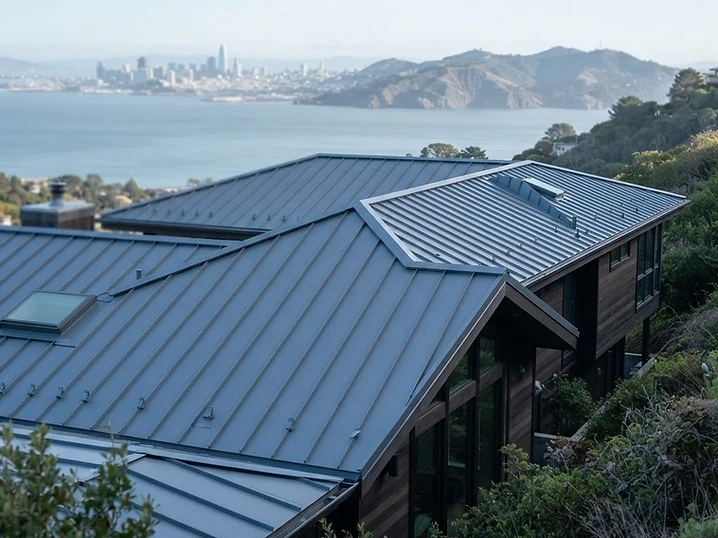
Family
Steep-slope
We install
Formed panels
Standing seam metal
Long metal panels with raised, interlocking seams and hidden fasteners. Clean lines, long service life, and no exposed fasteners on the field of the roof.
Where it belongs
- Modern and contemporary architecture
- Roofs where snow shedding, wind resistance, or longevity drive the decision
- Simple planes — the panel runs want long, uninterrupted slopes
- Projects where gutters and roof drainage can be planned around it
What to watch
- Thermal movement must be designed for, not resisted
- Oil canning (waviness) shows up with thin panels or poor substrates
- Detail work is metal shop work — valleys and transitions are unforgiving

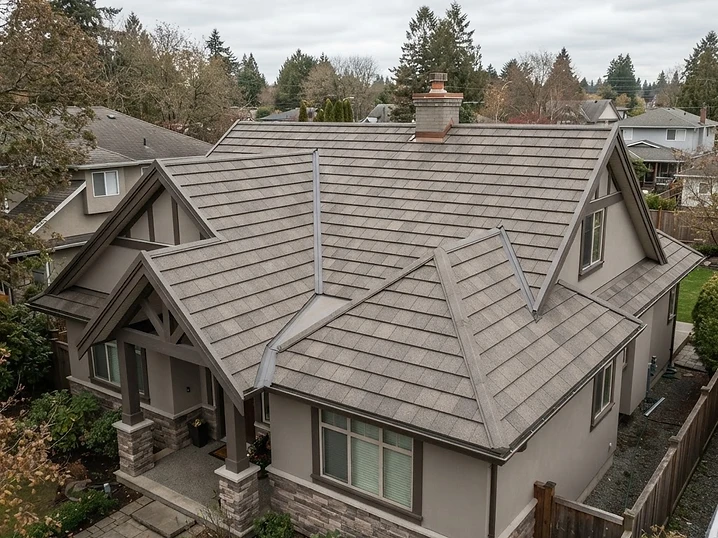
Family
Steep-slope
We install
Westlake Royal Unified Steel
Stone-coated steel
Steel panels coated with stone granules, pressed into shake, shingle, or Spanish tile profiles. It delivers the look of a heavy roof at a fraction of the weight, without rot, moss, or annual upkeep.
Where it belongs
- Homes that want a shake or tile look without the maintenance
- Re-roofs where the existing structure cannot carry clay or concrete tile
- Hail and fire exposure — Class 4 impact-rated panels
- Coastal sites where salt air attacks other materials
What to watch
- Panel layout and trim are manufacturer-specific — mixing brands breaks the warranty
- Walking a stone-coated roof requires care to avoid abrading the coating
- Fastener placement is prescribed; free-styling voids coverage

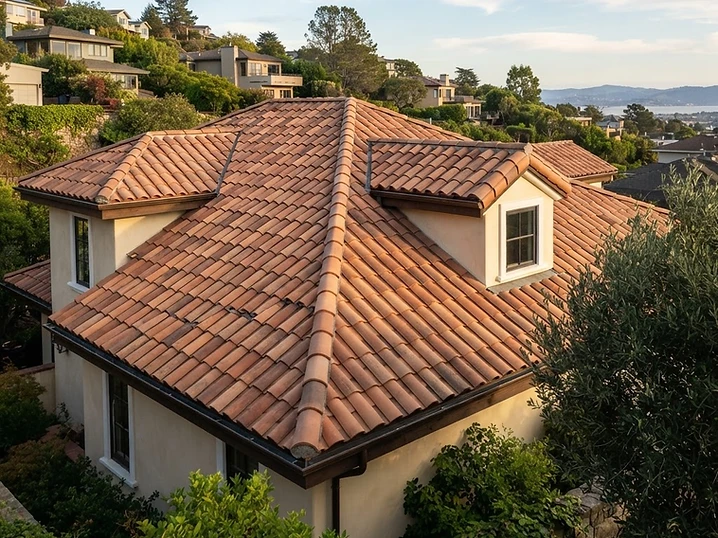
Family
Steep-slope
We install
Westlake Royal
Clay and concrete tile
Heavy, long-lived tile in clay or concrete. Tile is a rainscreen: the tiles shed most water, while the underlayment beneath them is the actual waterproof layer — which is why tile roofs leak when the layer under them ages out.
Where it belongs
- Mediterranean and Spanish-revival architecture
- Long horizons where a 50-year surface is the point
- Roofs with structure designed for the weight
- Warm, high-exposure sites where tile stays comfortable
What to watch
- Very heavy — structural capacity must be confirmed before specifying
- The underlayment has a shorter life than the tile, which is the real maintenance clock
- Cracked tiles and slipped tiles invite water into the underlayment

Family
Steep-slope
We install
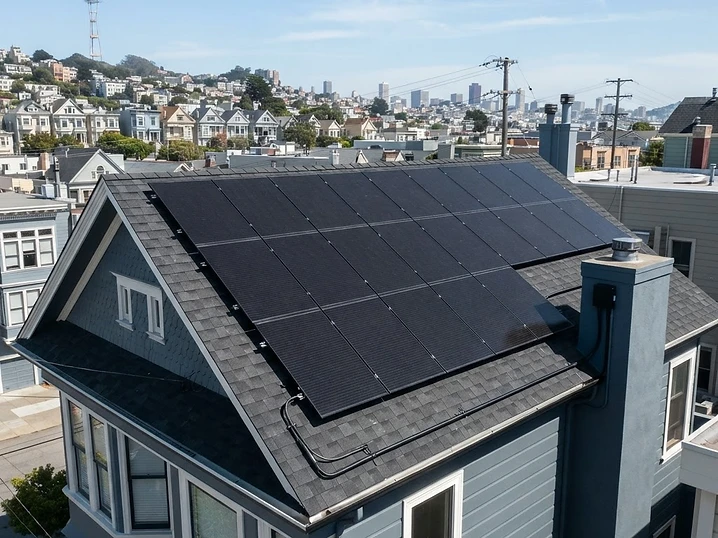
GAF Energy / mounted arrays
Solar roofing
Solar either mounts above a new roof or integrates into it as a roofing product. Either way, the roof has to be built first and built to take the mounting — the array is only as good as the layer beneath it.
Where it belongs
- New roofs where the array and the waterproofing are planned together
- Sun-exposed planes that are not shaded by trees or adjacent buildings
- Owners planning to stay long enough to see the payback
- Projects where roof and solar warranties can be coordinated
What to watch
- Never mount solar through a roof at the end of its life — you will pay twice
- Penetrations must be flashed with the same care as any other roof opening
- Future service access and array removal should be planned at install
Get Started
Not sure which material fits your building?
We will walk the roof, look at the structure and drainage, and tell you what we would put on it — including where a cheaper material is the right call.